Please find a description of this workshop below and contact me if you are interested in bringing this learning opportunity to your campus or organization.
Remote proctoring and other academic surveillance technologies sell themselves as “academic integrity” tools. When we look more closely at these products, we see how they compromise relationships between students and instructors by encouraging a “pedagogy of suspicion” and rely on difference as a proxy for wrongdoing, leading many instructors to avoid them. However, decisions surrounding academic integrity and technology are never simple: Low-tech options like pen and paper exams may present fewer academic integrity concerns, but increased accessibility concerns and potentially increased need for accommodations. Students often have academic integrity concerns that are not addressed in instructors’ rejection of proctoring.
Participants in this workshop first review some of the documented harms of surveillance technologies like remote proctoring and plagiarism/AI detection to individual students, the classroom community, and to educational institutions. Then, participants will consider case studies that involve academic integrity, technology, and accessibility using two tools: (1) The “fundamental values of academic integrity” offered by the International Center for Academic Integrity (honesty, trust, fairness, respect, responsibility, and courage) and (2) the framework of “harm reduction,” which aims to help learning communities avoid the worst harms of surveillance technologies while balancing other legitimate needs. Participants will be encouraged to share their own experiences related to assessment, academic integrity, and accessibility throughout the workshop, and will come away with nuanced strategies to navigate these issues in the future.
Facilitator Bio:
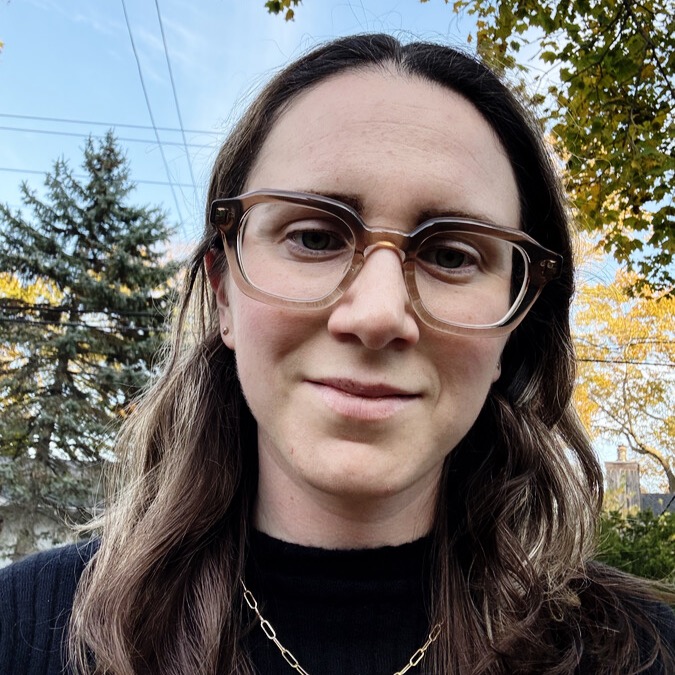
Sarah Silverman, PhD is an instructional designer, educator, and activist against surveillance technologies in higher education. As an instructional designer, she focuses on accessibility, Universal Design for Learning, and implementing feminist pedagogy online. She has supported instructors at UC Davis, UW Madison, and University of Michigan – Dearborn as an instructional designer and educational developer. Her research and writing about the harms of remote proctoring and opportunities for educational institutions to divest from it can be found in To Improve the Academy and The Journal of Interactive Technology and Pedagogy.
 Sarah E. Silverman